Business · WeChat cover · potential 72 · Machine-translated
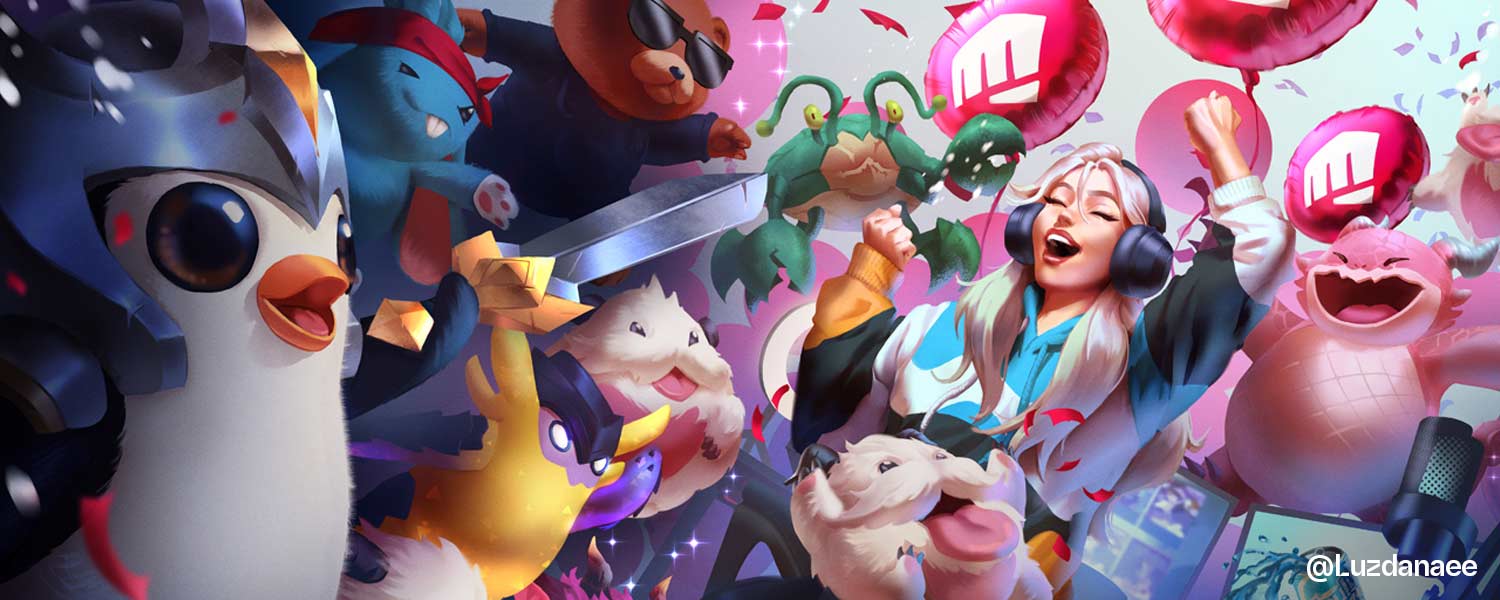
Creator Partnership Programs for League of Legends, VALORANT, and Teamfight Tactics Applications Opening Soon
Put the cover under the lamp. Each of the five things that made it work is a layer you can switch on: the words, the grid it sits on, the colours it uses, the subject, the light.
Verbatim. Copy it, or let Queenie swap in your own details.
Based on the reference cover's composition, visual metaphors, and WeChat public-account thumbnail readability, generate a new horizontal WeChat public-account cover. Output size: 1456x582, ratio about 2.5:1; the core subject and essential title information must also work within WeChat's safe square crop. WeChat article title: {填写公众号文章标题} Summary: {填写简介} Original cover method: 'Creator Partnership Programs for League of Legends, VALORANT, and Teamfight Tactics Applications Opening Soon' style dual-skill Create a horizontal WeChat public-account article cover, 2.35:1 aspect ratio, for an article titled "Creator Partnership Programs for League of Legends, VALORANT, and Teamfight Tactics Applications Opening Soon". Central concept: 把抽象工具能力可视化为界面窗口、代码片段、节点网络、操作台、AI 工作流或发光的系统核心。 Style: preserve the reference cover's visual direction: 高饱和海报/科技广告视觉. Use a palette inspired by #202237 (charcoal), #7a3e53 (brown), #707a96 (gray), #c48090 (pink). Keep the image editorial, conceptual, and readable as a small WeChat thumbnail. Composition: 画面信息量较高,适合用中心主体加左右辅助信息,保持缩略图可读。 Keep the main subject and any essential title text inside the safe square crop, while using the full wide frame for atmosphere, secondary symbols, or directional motion. Text strategy: use either no text or a very short headline fragment from the title. If text is used, make it large, clean, and integrated into the layout rather than pasted on top. Mood: match the article skill "英雄联盟、VALORANT及云顶之弈创作者合…风格双技能" -- useful, sharp, high-signal, and slightly more memorable than a normal tutorial thumbnail. Avoid: photorealistic clutter unless the source cover is photo-led, fake logos, unreadable tiny text, generic gradient blobs, stock-office imagery, watermark-like marks, and literal screenshots unless the article is explicitly about software interfaces.